In this article
There’s a certain kind of person who hears “wine in a can” and physically recoils. You know the one. Swirls a glass at a backyard cookout. Says things like “structure” and “minerality” while everyone else is just trying to get a cold drink before the ice melts. To that person, the can is proof the world is going soft.
I used to sort of nod along. Then I spent a summer actually reaching for cans instead of arguing about them, and I came around hard. Not out of some principle, either. I just noticed the can fixes a stack of problems glass bottles have been handing us for a hundred years and calling features.
Let me make the case.
So, is canned wine actually good?
Yes. And the reason is boring in the best way: the can is just a container, and it happens to be a really good one. Island Grove puts two of its best sellers in cans, so if you just want to see the canned wine lineup, start there.
Wine has two natural enemies: light and oxygen. A clear glass bottle lets light right in. And the second you pull the cork, oxygen starts working on what’s left. A can blocks light completely and stays sealed tight until the second you crack it, which means the wine inside is as fresh as the day it was filled. There’s nothing about aluminum that touches the wine, either; the inside is lined so all you taste is what’s supposed to be there.
Here’s the whole argument in one place:
| A bottle | A 250mL can | |
|---|---|---|
| Light | Clear glass lets it in | Blocked completely |
| Once it’s open | Oxygen starts on the other four glasses | There’s nothing left over: a can is a glass and a half |
| To open it | A corkscrew you have to remember | Nothing |
| Where it can go | Not the boat ramp, the springs, the sandbar or the pool | Anywhere |
| Getting it cold | Slow | Fast, because aluminum pulls cold quick |
| When you’re done | Breakable, and it rolls | Crushes down to nothing |
The quality question was always about the wine, never the can. Put good wine in a can and you get good wine in a can. It really is that simple.
The can solves a problem glass never could
Here’s the thing nobody wants to admit about a bottle: it’s a commitment.
You open a bottle to have one glass, and now you’re responsible for the other four. Cork it, shove it in the fridge, and tell yourself you’ll finish it tomorrow. You won’t. By tomorrow it’s flat and sad, and you pour half of what you paid for down the drain. Multiply that across a summer of “I just want one glass” evenings and you’ve quietly wasted a case.
A can ends that. One 250mL can is a generous glass and a half. Two cans work out to about three glasses, if you’re keeping track. So you pour exactly what you want, and there’s nothing left over to babysit. No cork, no leftovers, no guilt. The wine you don’t drink today is still sealed and perfect for next weekend.
It goes everywhere a bottle can’t
This is where I fully switched sides, and it’s a very Florida thing.
Half the good stuff around here happens somewhere a glass bottle has no business being. Boat ramps. Spring runs. The sandbar. A pool. A tailgate. Most of those places straight-up ban glass, and the ones that don’t should. Try opening a bottle on a boat sometime. No flat surface, the cork goes overboard, and if the bottle drops it either shatters in the cooler or sinks to the bottom of the Ichetucknee.
A can just works out there. I go deeper on what to actually bring on the boat if that’s your particular version of outside. No corkscrew to forget. It chills fast because aluminum pulls cold quick, it packs flat in a cooler, and when you’re done it crushes down to nothing instead of rolling around as a hazard. It’s the difference between wine being a hassle you leave at home and wine being something you actually bring.
Nobody has to commit to a whole bottle
Cans are also just better for how people actually drink together.
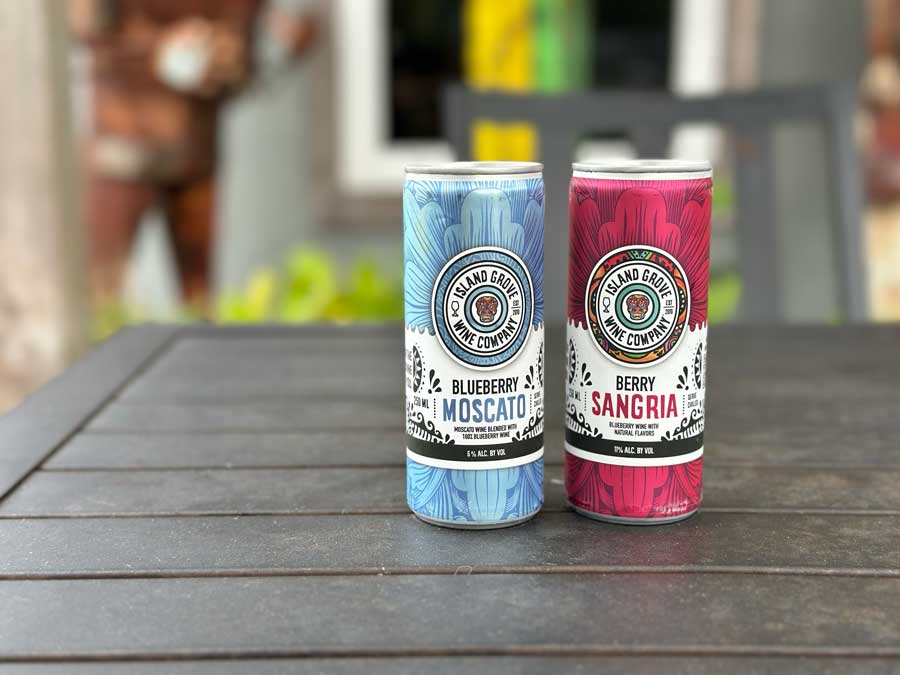
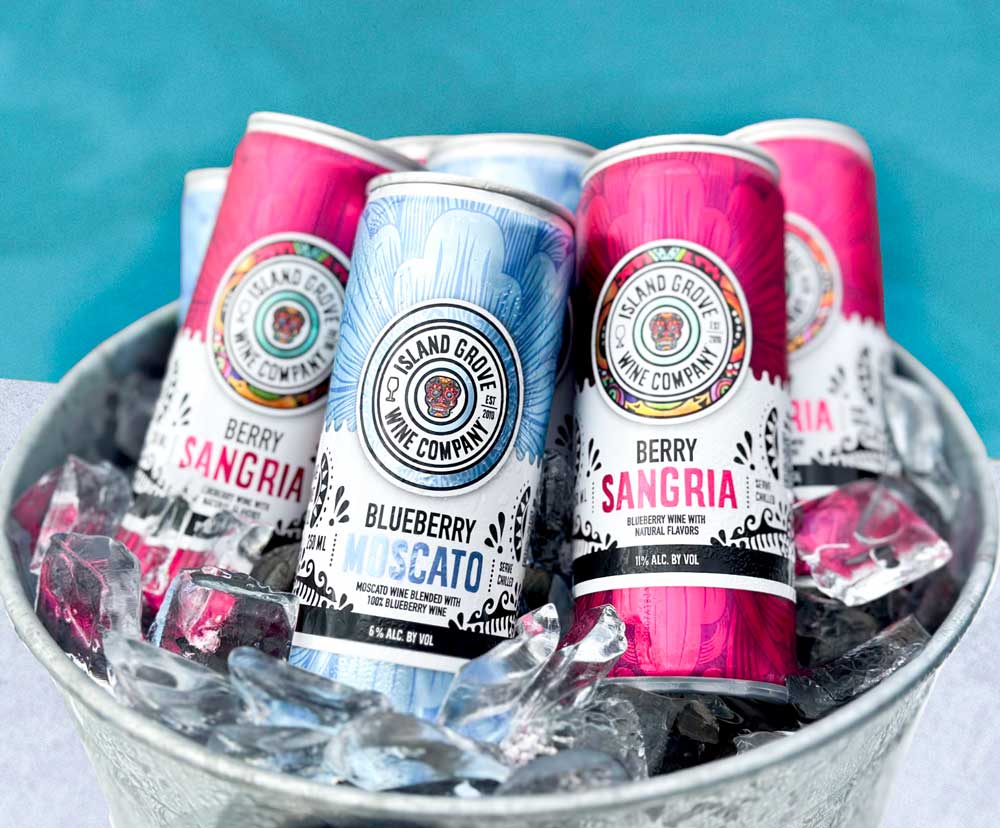
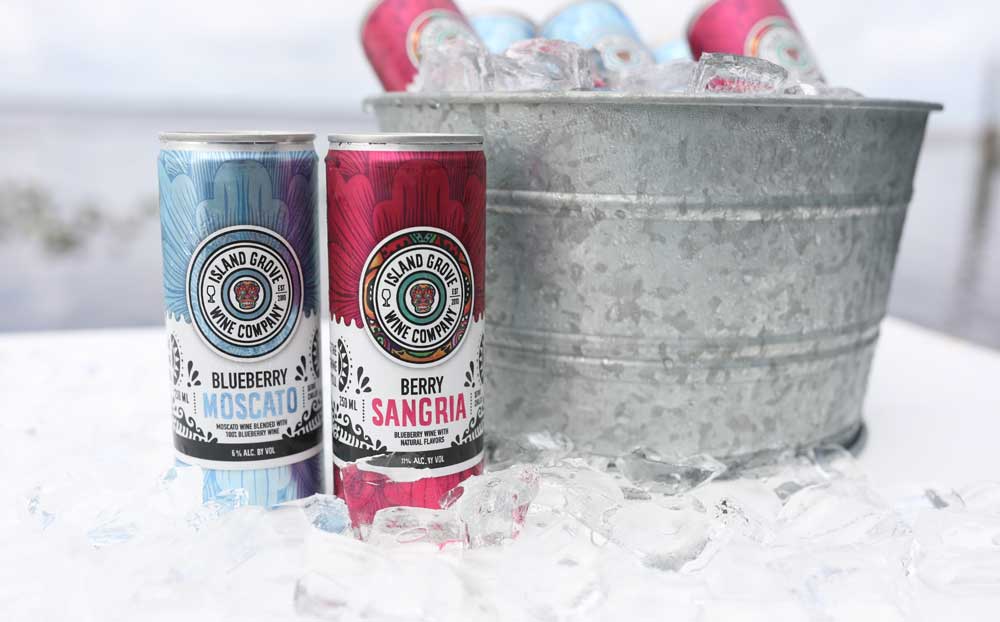
Everybody gets to pick their own. One person’s on the Berry Sangria, somebody else wants the Blueberry Moscato, and nobody’s negotiating over which single bottle to open. You’re not locked into finishing anything, so a lazy afternoon doesn’t have to turn into a full bottle per person. Grab a lower-proof can, sip it slow in the sun, and you’re still in good shape to drive the boat back to the ramp.
It’s wine that fits the occasion instead of demanding one.
Why cans, why now
The format isn’t new, but the moment finally caught up to it. A generation that grew up on hard seltzer never had the hangup about drinking good stuff out of aluminum. I came over from seltzer myself, and wrote up the comparison if you want the side by side. The can already meant “easy” and “outside” and “no big deal,” and wine slid right into that.
Part of that wait was paperwork, which is funnier than it sounds. Until the end of 2020 the 250mL can wasn’t a legal size for wine in the US at all. TTB added 200, 250 and 355 milliliters to the authorized container sizes in a final rule that December, after years of comments from wineries pointing out the obvious: those cans were already being mass-produced for beer and soda, and wine was the only thing not allowed to use them.
There’s a sustainability angle too, if you care, and you probably should. Aluminum is lighter to ship than glass and recycles basically forever, over and over, without losing quality. So the can that’s more convenient for you also happens to be the one that’s easier on the coast you’re drinking next to. Not a bad trade.
What to actually put in your cooler
If you want to test the theory, this is easy, because Island Grove already puts its two best crossover wines in cans.
The Berry Sangria is the one I keep coming back to on the water. Tropical fruit blended with their blueberry wine, made to go over ice, at a can-friendly 11%. It drinks like summer and doesn’t ask you to think about it.
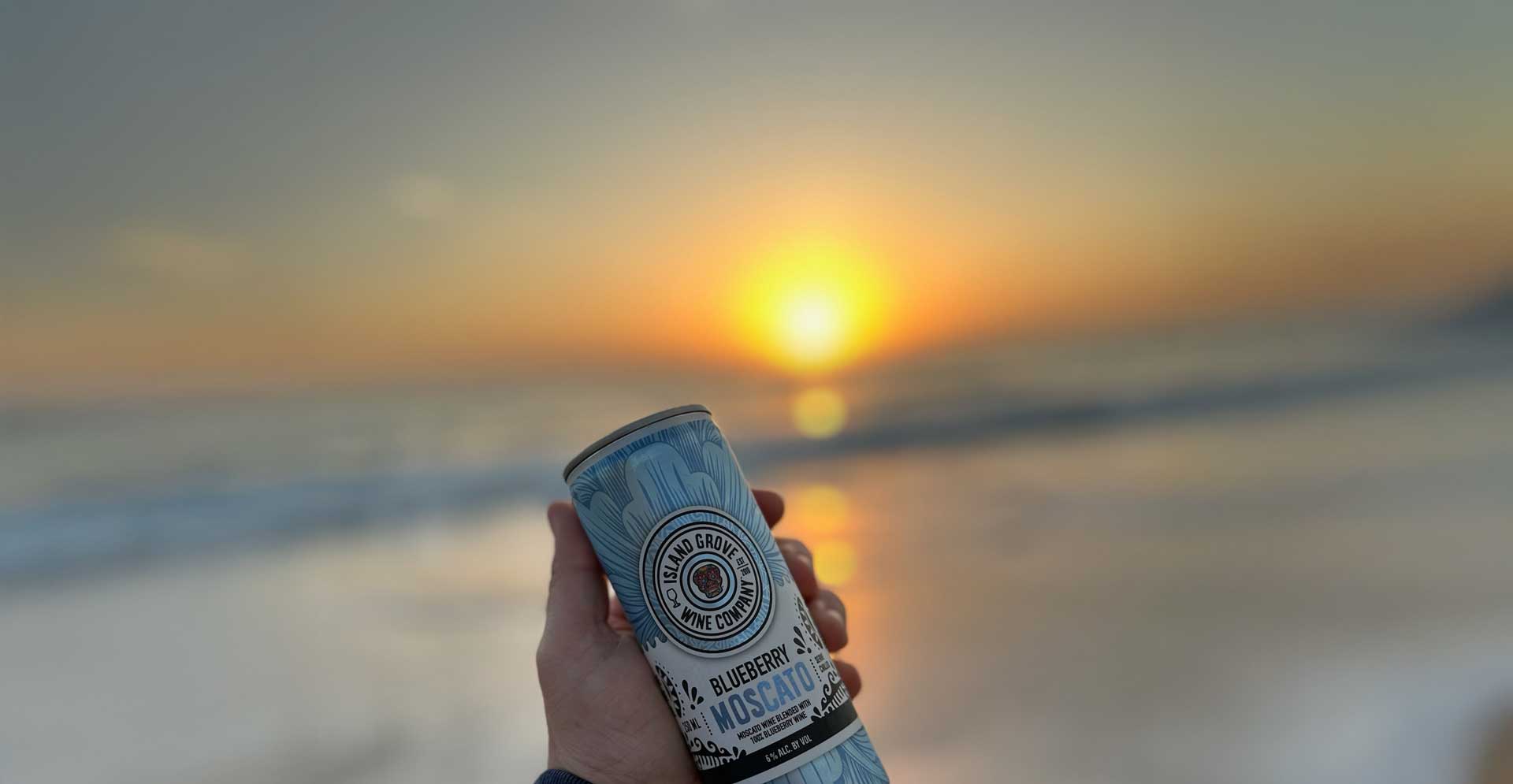
The Blueberry Moscato is the poolside pick: sweet, a little honeysuckle on the nose, real Florida blueberries in the blend, and an easy 6% that lets you enjoy the whole afternoon instead of just the first hour. It’s the one to hand someone who swears they don’t like wine.
Both come in 4-packs of 250mL cans for eighteen bucks, which is roughly the price of one decent bottle you’d have felt obligated to finish. Throw a mix of both in the cooler and let everybody sort themselves out.
The can was never the compromise. It’s just wine that finally meets you where you actually live, which around here means outside, near the water, with no corkscrew in sight.
Common questions
Is canned wine actually good?
Yes. The can is just a container, and it happens to be a very good one. Wine's two natural enemies are light and oxygen; a can blocks light completely and stays sealed until you open it. The inside is lined, so nothing about the aluminum touches the wine. Put good wine in a can and you get good wine.
How much wine is in a can?
One 250mL can is a generous glass and a half, so two cans work out to roughly three glasses. You pour exactly what you want and there's nothing left over to babysit: no cork, no leftovers, and no half-finished bottle going flat in the fridge door.
Why is canned wine better for the beach or a boat?
Most places worth drinking outside, like boat ramps, spring runs, sandbars and pools, either ban glass or should. A can needs no corkscrew, chills fast because aluminum pulls cold quickly, packs flat in a cooler, and crushes down when you're finished instead of rolling around as a hazard.
Which Island Grove wines come in cans?
Two. The Berry Sangria is tropical fruit blended with their blueberry wine, made to go over ice, at 11% ABV. The Blueberry Moscato is the sweeter poolside pick at 6% ABV, with real Florida blueberries in the blend. Both come in 4-packs of 250mL cans.