In this article
There’s a specific kind of disappointment that comes from reaching into a cooler at two in the afternoon and pulling out a bottle that’s roughly the temperature of bathwater. You packed ice. You saw the ice. The ice was right there.
I did this for years without ever asking why it kept happening. The answer turned out to be physics, and it’s the kind of thing that once you know it, you can’t stop noticing everyone else getting it wrong at every cookout you go to.
How do you actually keep wine cold outside?
Ice water, not ice.
A bottle sitting in a cooler full of dry cubes is mostly touching air. There are gaps everywhere — around the shoulders, between the cubes, along the label — and air is a genuinely bad conductor of heat. The bottle is insulated by the very thing you packed to cool it.
Pour water in until the bottle is submerged and those gaps disappear. Now the glass is in contact with a liquid that pulls heat out of it many times faster than air does. Same cooler, same ice, dramatically different result.
Then add a handful of salt. Salt lowers the freezing point of the bath, so instead of sitting at 32°F it drops below that. It’s the same trick behind hand-cranked ice cream, and it works here for the same reason.
That’s the whole method. Ice, water, salt, submerge. Turn the bottle once if you’re impatient.
The part nobody tells you
The bath will chill a bottle in something like twenty minutes. Your fridge takes well over an hour, and the freezer — which is what most of us actually reach for — is worse than either, because you forget about it and then you’re chipping a slushy bottle out of the back at nine o’clock.
I’m not going to pretend I discovered this. Every bartender already knows it. But almost nobody does it at home, and nobody at all does it at the beach, which is where it matters most.
What temperature does each one actually want?
Cold isn’t one setting, and this is where a lot of good wine gets wasted. Here’s how the Island Grove lineup breaks down.
| Wine | Serve it | Why |
|---|---|---|
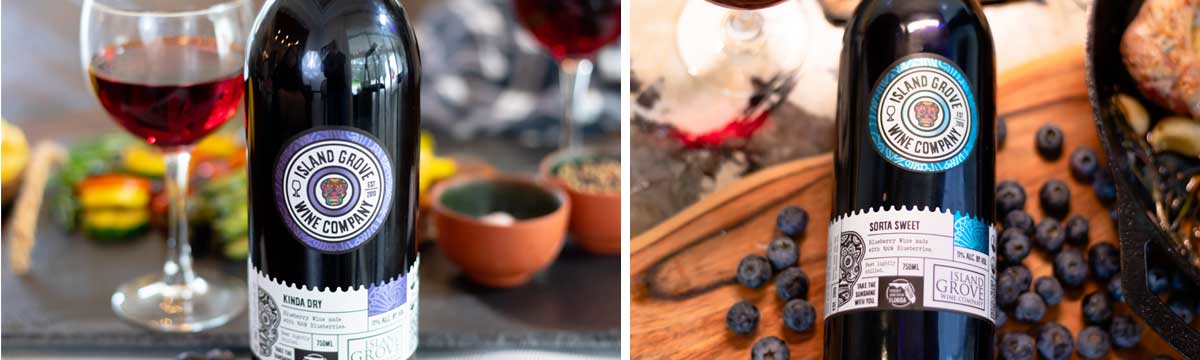
| Kinda Dry Blueberry | Room temperature | Up to 30 days on the skins gives it real tannin. Cold flattens it, the same way it would flatten a red |
| Sorta Sweet Blueberry | Chilled | Lighter and softer. The chill is what makes it easy |
| Blueberry Moscato | Properly cold | Sweet wine. Cold keeps the sweetness in check instead of letting it go syrupy |
| Berry Sangria | Cold, over ice | It’s built for it. This is the one wine here where ice in the glass isn’t a crime |
The Kinda Dry line surprises people every time. It’s a blueberry wine, so the instinct is to chill it into submission, and doing that strips out everything that makes it worth drinking. I went into why that wine has structure at all elsewhere, but the short version is that it earns a red’s treatment, so give it one.
Why cold doesn’t stay cold here
Now the part where Florida ruins everything.
The thresholds are lower than most people assume. Purdue Extension’s wine storage guidelines put long-term storage at 50–60°F and say wine should never hit 86°F, even briefly. A closed car in an August parking lot clears that before you’ve finished the groceries.
Getting wine cold is easy. Keeping it cold is the actual problem, and it’s a different problem, and almost none of the advice online is written by people dealing with 95 degrees and humidity you can lean against.
Three things work against you. Ambient heat, which is relentless. A cooler lid that gets opened roughly every four minutes because somebody always wants something. And the glass itself — the moment you pour, you’re holding a small open container of wine in direct sun, and it starts climbing immediately.
So you do everything right, and the wine is perfect for about eleven minutes, and then it’s fine, and then it’s warm, and then you top it up from a bottle that’s also been sitting out.
Where the bottle stops working
I want to be fair to the bottle here, because I still bring one most weekends.
If there’s shade and a table and people who are going to drink it within the hour, a bottle in an ice-water bath is the right call and it’s not close. It pours better, it looks better, and you can share it properly.
The failure is specific. A bottle is a commitment to a volume and a timeline. Once it’s open you own all of it, and you own it at whatever temperature the afternoon decides. On a boat, at the sandbar, at a tailgate where there’s no table and no shade and no plan — that’s where it falls apart. I wrote up what actually works on the water if that’s your particular version of outside.
What I actually do now
I bring cans, and the reason is temperature more than anything else.
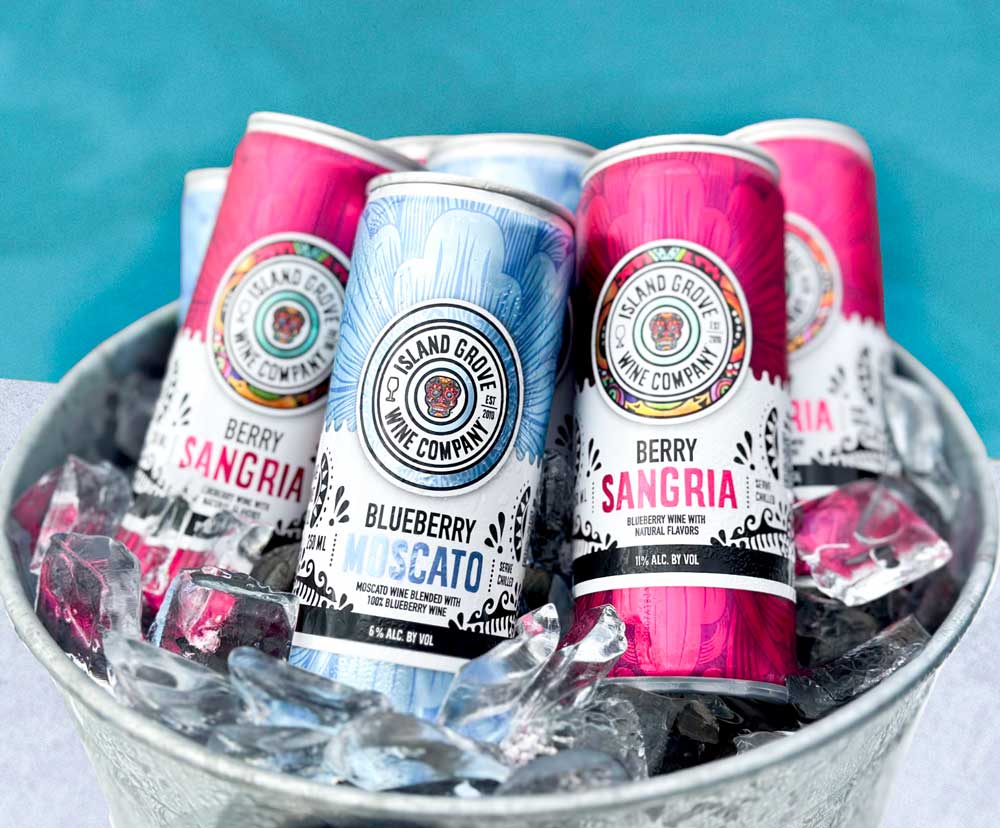
A 250mL can holds a third of what a bottle does and it’s aluminum, which moves heat far better than glass. It goes from cooler-cold to drinking-cold fast, and more importantly it gets cold fast enough that you don’t have to plan. Drop them in the ice water when you arrive and they’re ready before the grill is.
Then there’s the part that solves the actual Florida problem: you’re only cooling what you’re about to drink. Crack one, drink it, and the other three are still sealed and still cold. Nothing is sitting open in the sun getting worse while you decide whether you want more. There’s no half-bottle to babysit and no warm pour at the end.
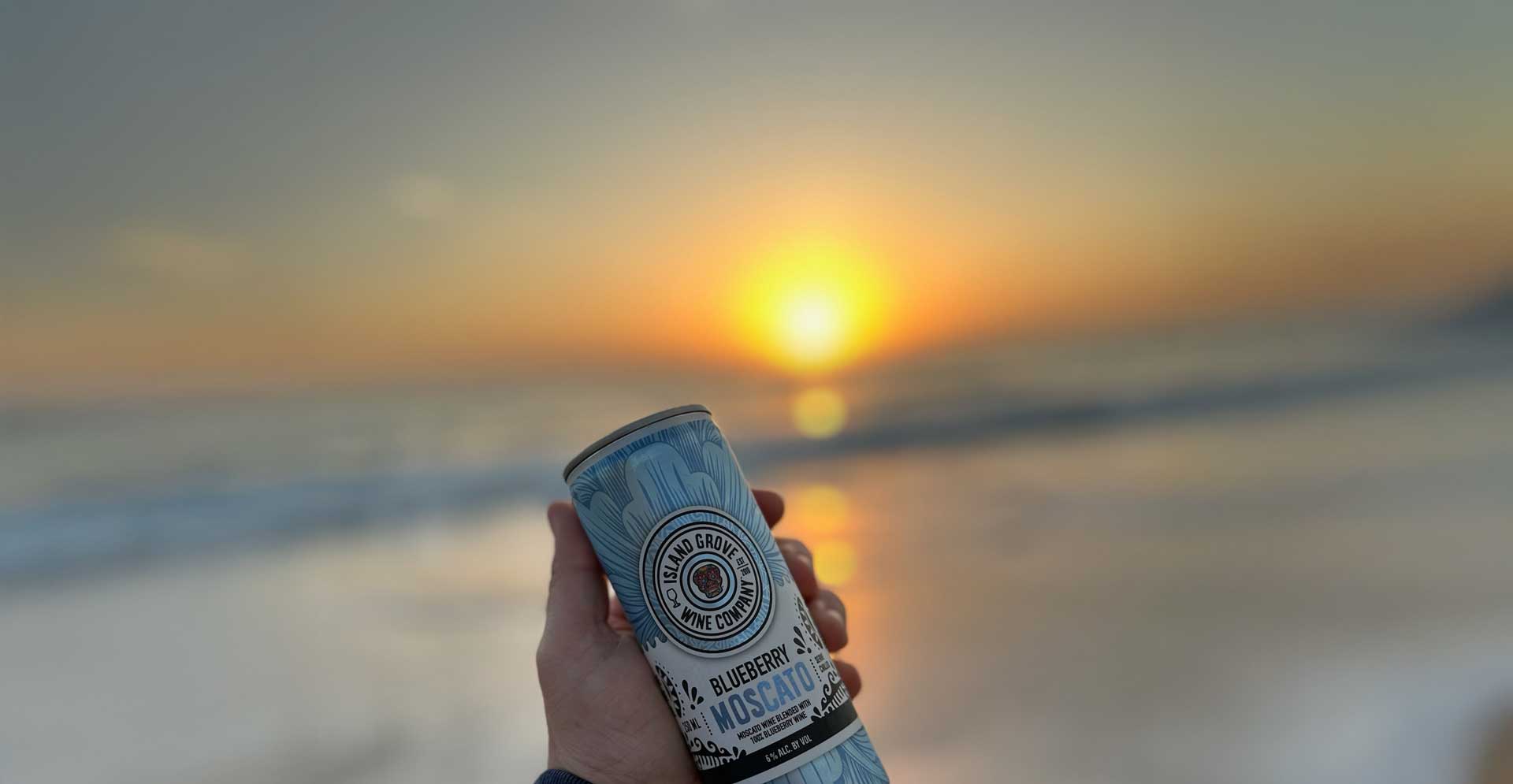
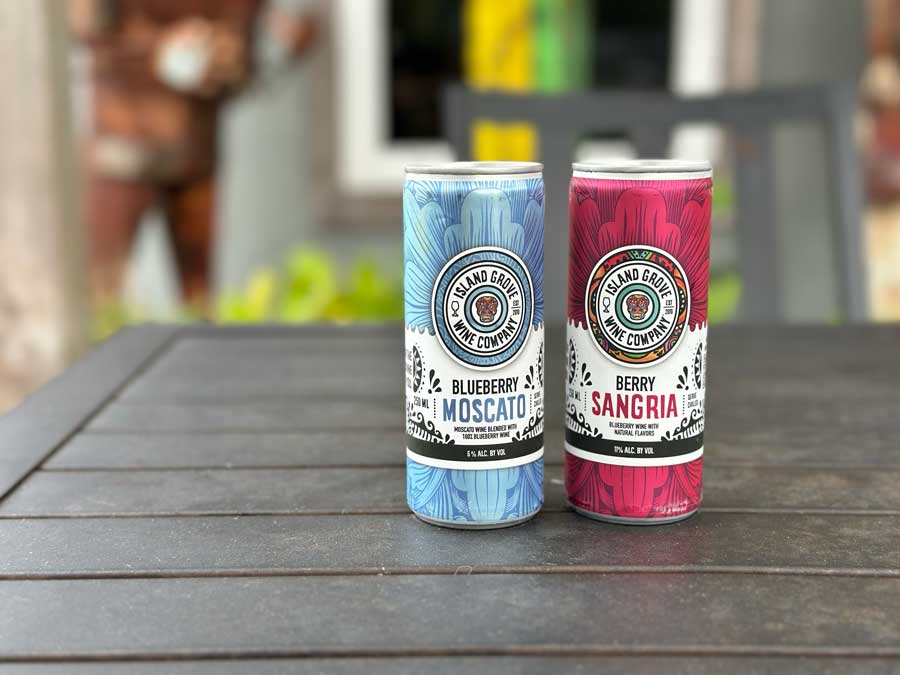
The Berry Sangria is the one I keep in the cooler, at 11% and made to go over ice, which means it’s the rare wine that doesn’t get worse when the ice starts melting into it. If you want something lighter for a long afternoon in the sun, the Blueberry Moscato is 6% and does the job without asking much of you. Both come in 4-packs.
None of which means throw out the corkscrew. It means that the effort of keeping wine cold outside is real, and there’s a format that already did the work for you. Ice water and salt for the bottle nights. Cans for everything else.
How to chill wine fast in Florida heat
Fill the cooler with ice
Load the cooler with ice the way you normally would. On its own this is not enough: a bottle sitting in dry cubes is mostly touching air, and air is a bad conductor of heat.
Add water until the bottle is submerged
Pour in cold water until the gaps around the shoulders and between the cubes disappear. The glass is now in contact with a liquid that pulls heat out of it many times faster than air.
Throw in a handful of salt
Salt lowers the freezing point of the bath, so it sits below 32°F instead of at it. Same trick as hand-cranked ice cream, working for the same reason.
Submerge and wait about twenty minutes
Turn the bottle once if you are impatient. Twenty minutes or so gets most bottles where you want them — the fridge takes well over an hour and the freezer is worse than either.
Serve each wine at the temperature it wants
Kinda Dry Blueberry goes at room temperature, because up to 30 days on the skins gives it real tannin that cold flattens. Sorta Sweet is chilled, Blueberry Moscato properly cold, and Berry Sangria cold over ice.
Keep the lid shut and pour only what you will drink
Getting wine cold is easy in Florida; keeping it cold is the real problem. Every lid opening and every poured glass in the sun works against you, which is why a sealed can beats an open bottle on a long afternoon.
Common questions
How do you keep wine cold outside?
Use ice water, not ice. A bottle sitting in dry cubes is mostly touching air, and air is a poor conductor of heat. Fill the gaps with cold water and a handful of salt, which drops the bath below freezing, and the same cooler chills faster and holds temperature longer.
What is the fastest way to chill a bottle of wine?
An ice-water bath with salt in it, turned once or twice. It beats the freezer and it beats the fridge comfortably, because water pulls heat out of glass far quicker than cold air does. Twenty minutes or so gets most bottles where you want them.
Should blueberry wine be served cold?
Two of the three, yes. Sorta Sweet and Blueberry Moscato both want a proper chill. Kinda Dry does not: it is fermented on the skins for up to 30 days and has real tannin, so cold flattens it out the same way it would flatten a red. Serve that one at room temperature.
How long does wine stay cold in a cooler?
Less time than you think in Florida, because the enemy is not the cooler, it is everything else. Ambient heat, a lid that gets opened every few minutes, and a poured glass that starts warming immediately. Getting wine cold is easy here. Keeping it cold is the actual problem.