In this article
Say “fruit wine” to most people and watch their face. They’re picturing something sweet enough to stand a spoon up in, the kind of bottle that lives on a gift-shop shelf next to the fudge. And honestly, a lot of fruit wine has earned that. Take a fruit, add sugar, ferment, done. It tastes like alcoholic juice because that’s basically what it is.
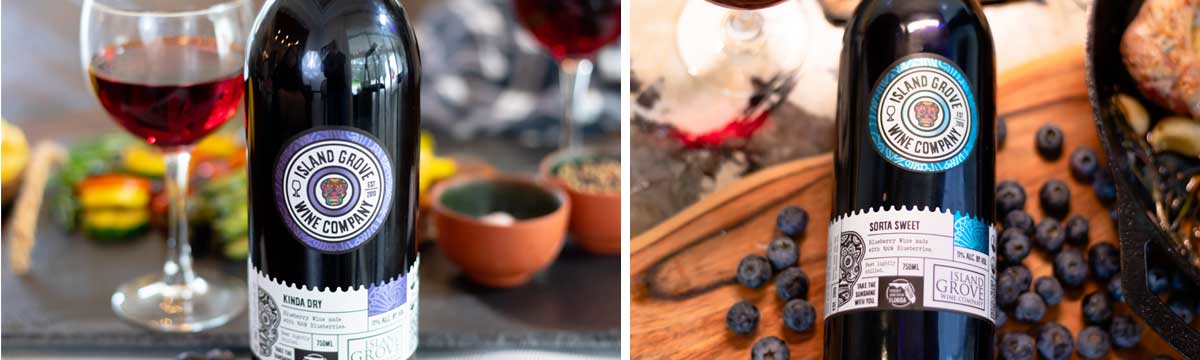
So the first time somebody poured me Island Grove’s Kinda Dry, I was braced for the juice. What I got instead was a wine with grip, a dry finish, and enough going on that I had to put my phone down. It drinks like a red. That’s not an accident, and it’s not marketing. It comes down to one decision they make that most fruit wineries skip.
What most fruit wine gets wrong
Here’s the shortcut version of how easy fruit wine usually gets made: press the fruit, take the juice, throw out the skins, ferment the juice with a bunch of sugar. Fast, cheap, and it tastes like exactly what it is.
The problem is that you just threw away the good part. Everything that makes a wine feel like wine instead of juice, the structure, the grip, the thing that makes your mouth do that slight dry pucker, lives in the skins. Skip the skins and there’s no way to get it back. You’re left leaning on sugar to make the wine taste like anything, which is how you end up with the gift-shop stuff.
The thing they actually do differently
Island Grove ferments their blueberry wine on the skins. For Kinda Dry, that’s up to 30 days of the juice sitting in contact with the blueberry skins before it gets pressed off.
That’s where tannin comes from. Tannin is the compound that gives red wine its backbone, the reason a Cabernet can stand up to a steak while grape juice can’t. Blueberry skins have it, same as grape skins do, but you only get it into the wine if you leave the juice sitting on those skins long enough to pull it out. Thirty days is a serious commitment for a fruit wine. It’s the difference between a wine that has a spine and a wine that’s just sweet and red.
This isn’t folklore. A 2022 study in Molecules that made blueberry wine by maceration measured where the good stuff actually sits: tannins were three times more concentrated in the skin than the pulp, and anthocyanins — the pigments doing the dark purple — came in at roughly a thousand times the pulp concentration. Press the juice off and bin the skins and you’ve thrown out almost all of both. That’s the whole ballgame.
The result, in Kinda Dry’s case, is a medium-bodied wine with a dark purple color, aromas of dark fruit and spice, and flavors that run toward black cherry and blueberry jam. If you served it to someone blind and told them it was a Merlot, they would not fight you on it.
Side by side, the two ways of making it:
| The shortcut | Island Grove’s Kinda Dry | |
|---|---|---|
| The skins | Pressed off and thrown out | Left in: up to 30 days of skin contact |
| Where the structure comes from | Nowhere, so sugar does the work | Tannin pulled out of the skins |
| How it drinks | Like alcoholic juice | Medium-bodied, dry finish, close to a red |
| What it tastes of | Sweetness first | Dark fruit and spice, black cherry, blueberry jam |
Wait, isn’t that just how red wine is made?
Basically, yeah. And that’s the point.
Red wine gets its color and structure from fermenting on grape skins. Island Grove is doing the same move with blueberries instead of grapes. There’s even a whole trendy category built on this idea from the other direction: orange wine, which is white grapes fermented on their skins to give a white wine red-wine grip. Skin contact is one of the oldest tricks in winemaking, older than the fancy modern stuff, and it works on more than just grapes.
So blueberry wine done this way isn’t some novelty knockoff of real wine. It’s real wine. It’s just using the fruit that grows here instead of the fruit that grows in France.
Why it matters that the fruit is blueberries
There’s a reason Island Grove can pull this off, and it’s the same reason the whole winery exists: they’re blueberry farmers first. The winery grew out of a working Florida blueberry operation, so the fruit going into these wines is their own, picked ripe, not trucked in from somewhere.
That matters because skin-contact fermentation only works if the skins are worth fermenting on. Healthy, ripe fruit off your own plantation is a different starting point than fruit sourced on price. You can’t fake structure into a wine at the end; it has to come from good fruit at the beginning.
The short version
Blueberry wine gets its bad reputation from the lazy way it’s usually made: juice plus sugar, skins in the trash. Island Grove goes the harder route, fermenting on the skins for up to a month to pull real tannin out of the fruit, which is the exact same principle that gives red wine its backbone. That’s why the Kinda Dry drinks like a red instead of like a wine cooler.
If you want to taste the difference the skins make, the Kinda Dry Blueberry is the one to start with, ideally next to dinner, since a wine with this much structure is built to go with food. I got into exactly what to eat with it elsewhere, but the short answer is: put it next to a steak and get out of the way. And if the sweeter bottle beside it on the shelf is the one catching your eye, here’s how the two compare.
Common questions
How is Island Grove's blueberry wine made?
It is fermented on the blueberry skins. For Kinda Dry, that means up to 30 days of juice sitting in contact with the skins before it is pressed off. Most fruit wine takes the shortcut instead: press the fruit, throw out the skins, and ferment the juice with a lot of added sugar.
Why does blueberry wine taste like a red wine?
Because of tannin. Tannin is what gives red wine its backbone, and it lives in the skins. Blueberry skins have it just as grape skins do, but you only get it into the wine by leaving the juice on those skins long enough to pull it out. Thirty days of skin contact is what gives Kinda Dry a spine instead of just sweetness.
Is skin-contact fermentation the same as how red wine is made?
Essentially, yes. Red wine gets its color and structure from fermenting on grape skins, and Island Grove does the same thing using blueberries. Orange wine works the same way from the other direction, with white grapes fermented on their skins. Skin contact is one of the oldest techniques in winemaking.
What does Kinda Dry Blueberry taste like?
Medium-bodied, with a dark purple color, aromas of dark fruit and spice, and flavors running toward black cherry and blueberry jam. Served blind and called a Merlot, it would not draw much argument. It is 100% blueberry wine at 11% ABV.